Launch offer — valid today only

📄 Digital book in PDF · read it on your phone or print it

Borehole Drilling in Drawings: Every Step of a Private Water Borehole, in Site Order One Drawn Page per Step

Siting distances, the licence line, rotary with mud, the down-the-hole (DTH) hammer, logging the strata, choosing the screen, the grout seal, pumping tests and total head. In metres, millimetres and litres, with UK rules. Each topic on its own page: the drawing first, then what to remember. 65 illustrated pages.

SEE THE PAGES INSIDE

🔒 Secure checkout · PDF by email · 30-day guarantee

Every topic, its own pageEach step of the borehole drawn, with the explanation beside it
65 illustrated pages8 parts, from the whole borehole on one page to the site-day checklist
Up-to-date sourcesEnvironment Agency, NRW, SEPA and NIEA guidance, the Water Resources Act 1991, the Private Water Supplies Regulations and BS ISO 14686
PDF by emailFormat

Look Inside the Book

Every page has one big drawing and a box with the depths, sizes and checks you need to know:

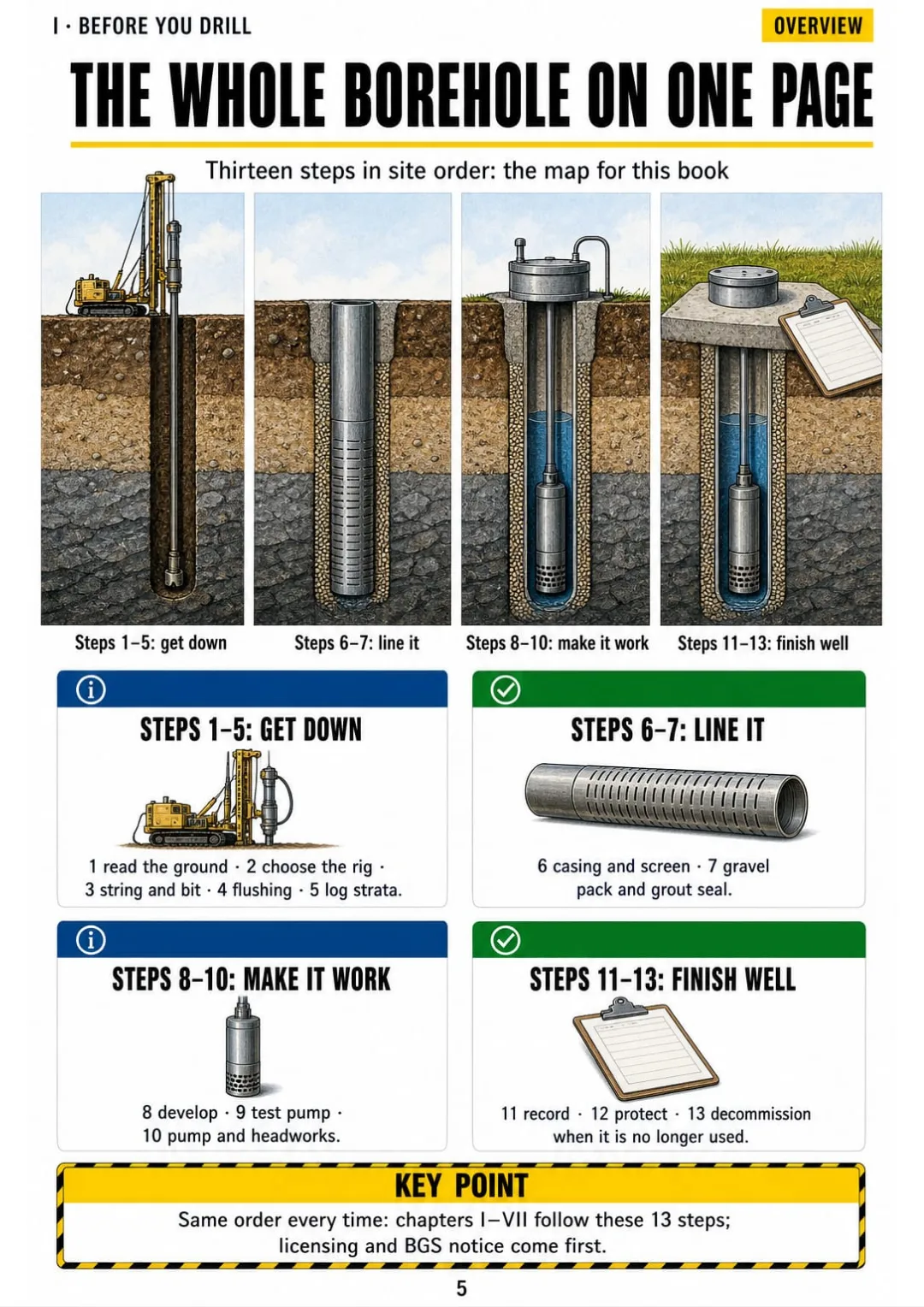
13 steps, one cross-section: from reading the ground to decommissioning.
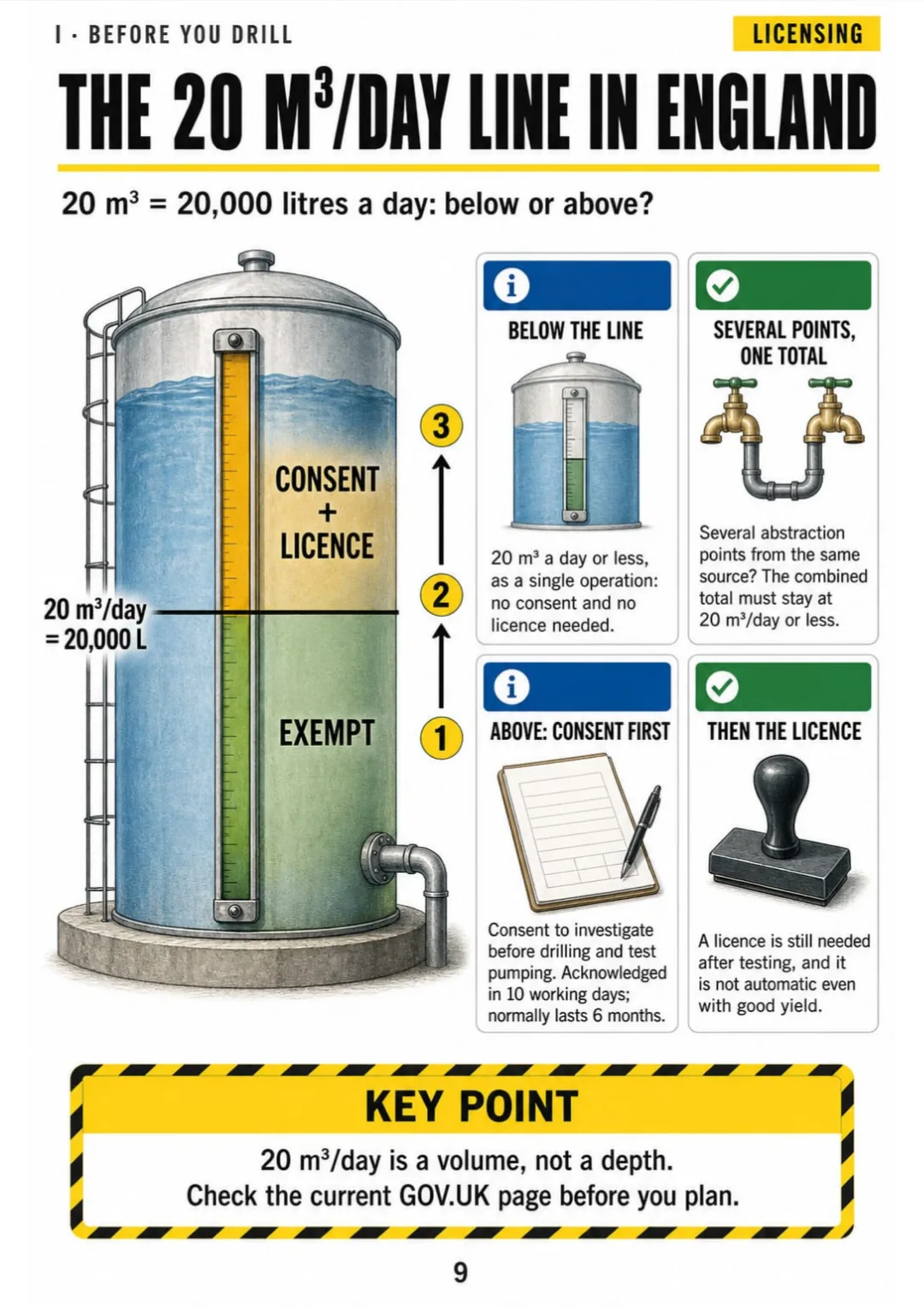
Up to 20 m³/day (20,000 litres) is licence-exempt in England.
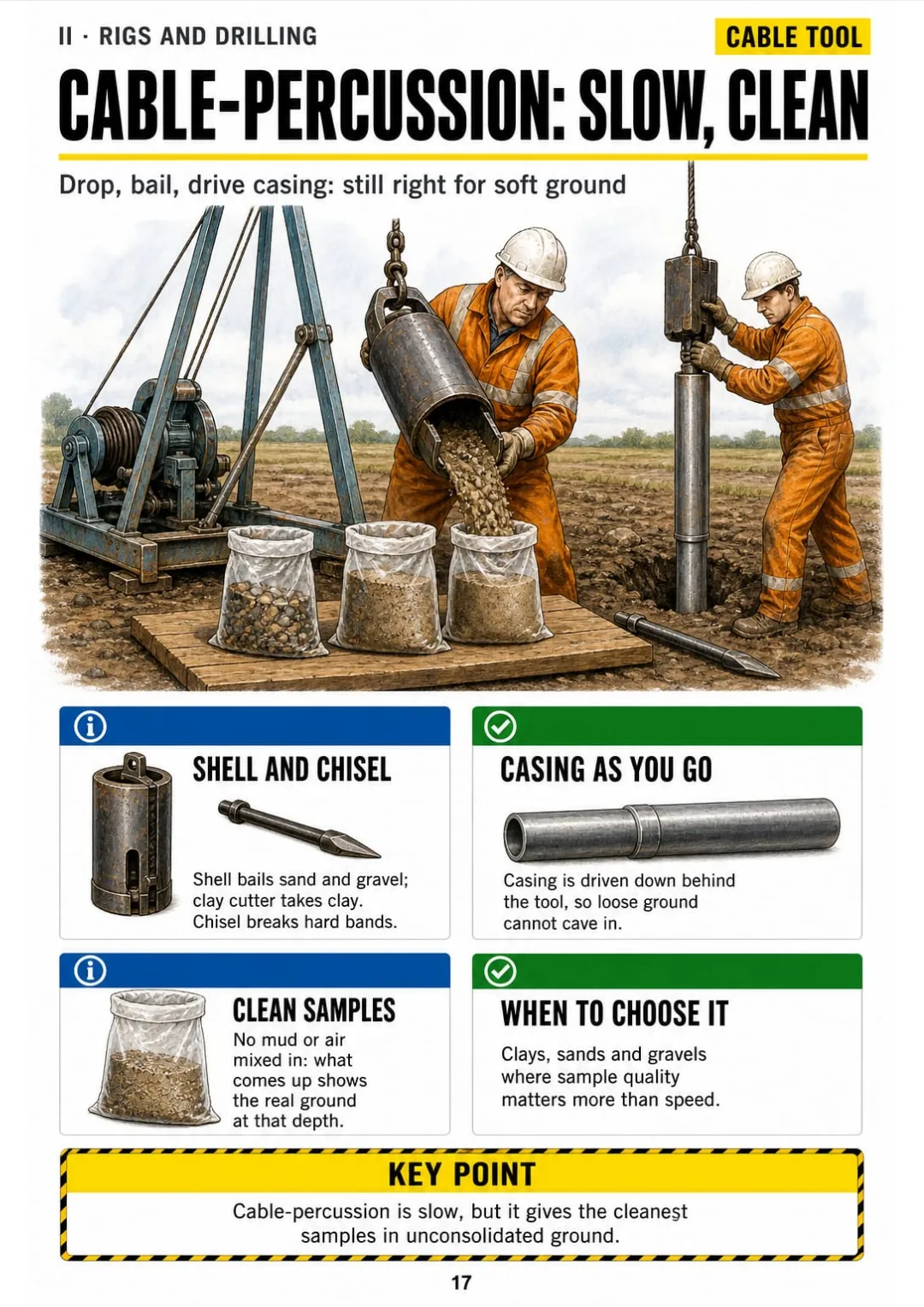
Shell, chisel and driven casing: the cleanest samples in clays, sands and gravels
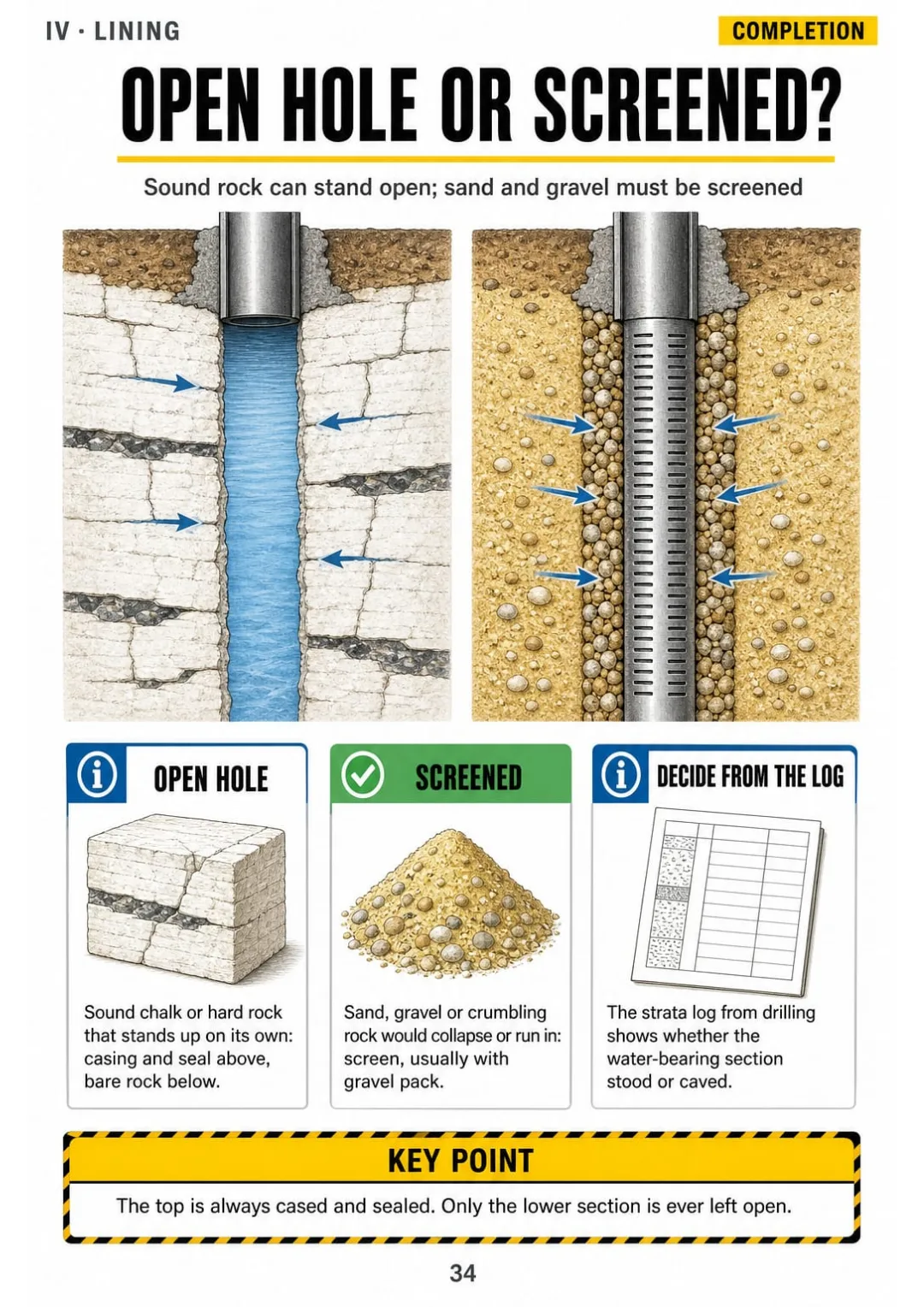
Open-hole chalk borehole vs screened sand-and-gravel borehole, drawn side by side
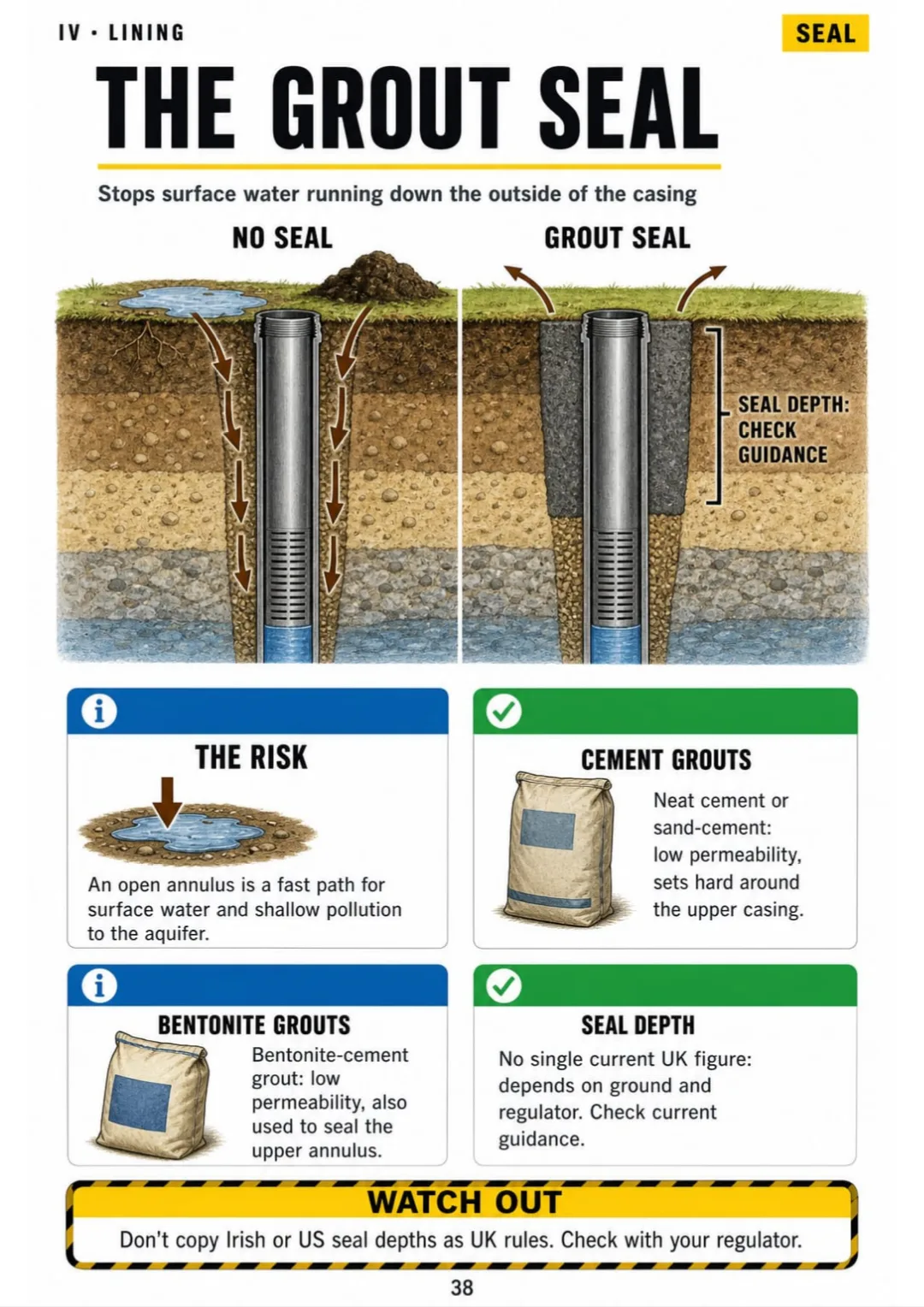
Why the upper annulus is grouted, and which grouts seal it
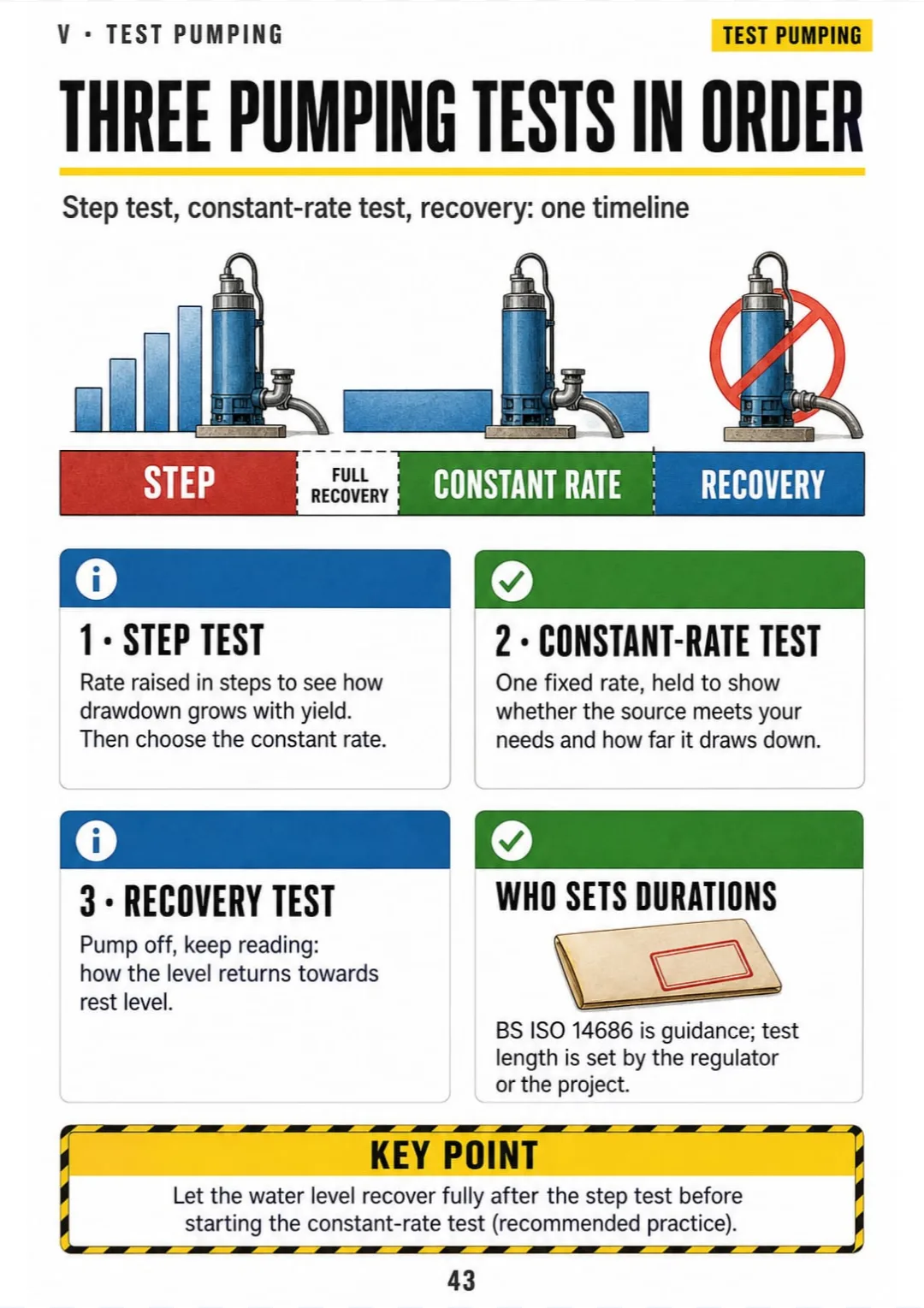
Step test, constant-rate test and recovery test on one timeline, as in BS ISO 14686
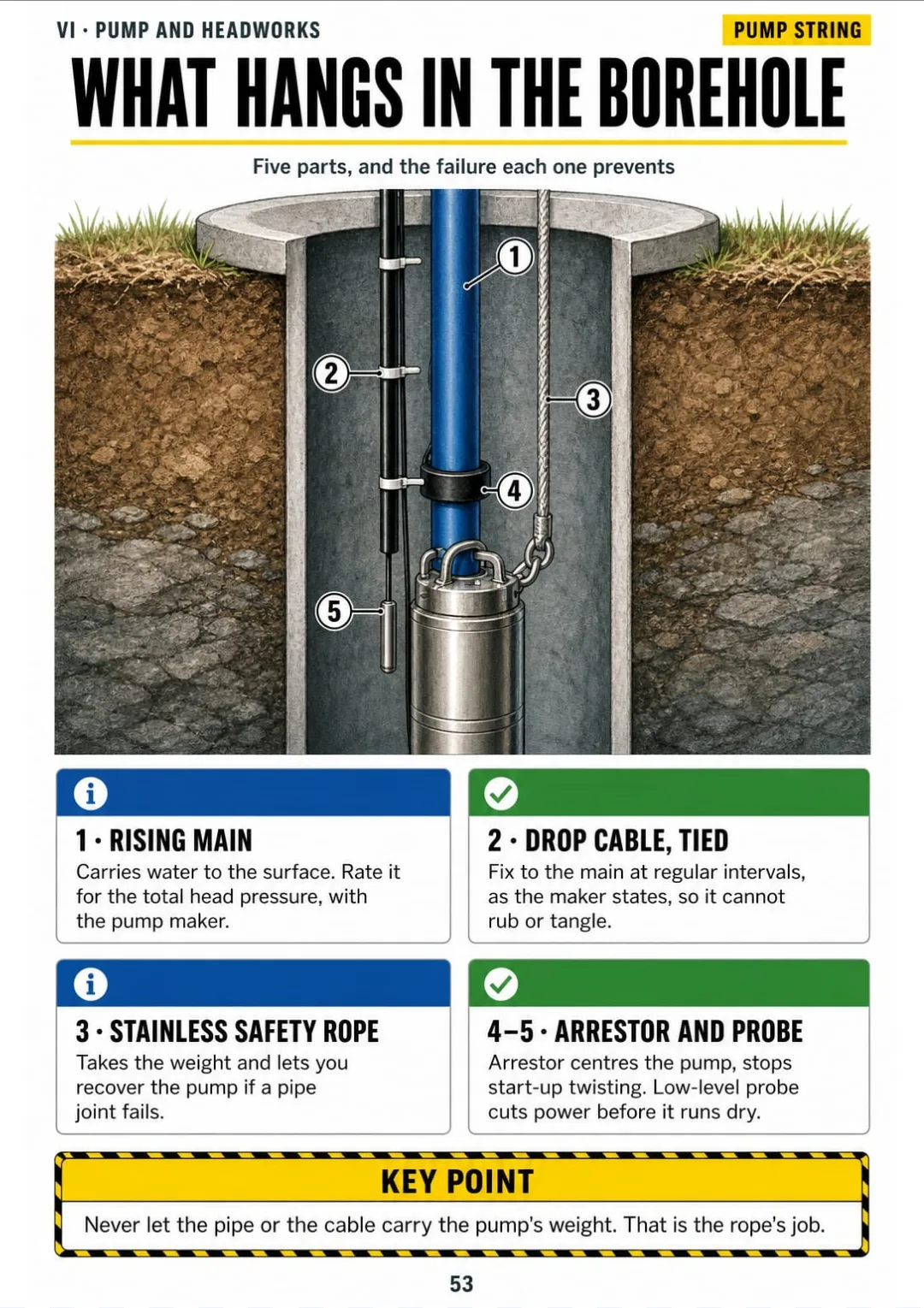
Rising main, tied cable, stainless rope, torque arrestor, low-level cut-out probe
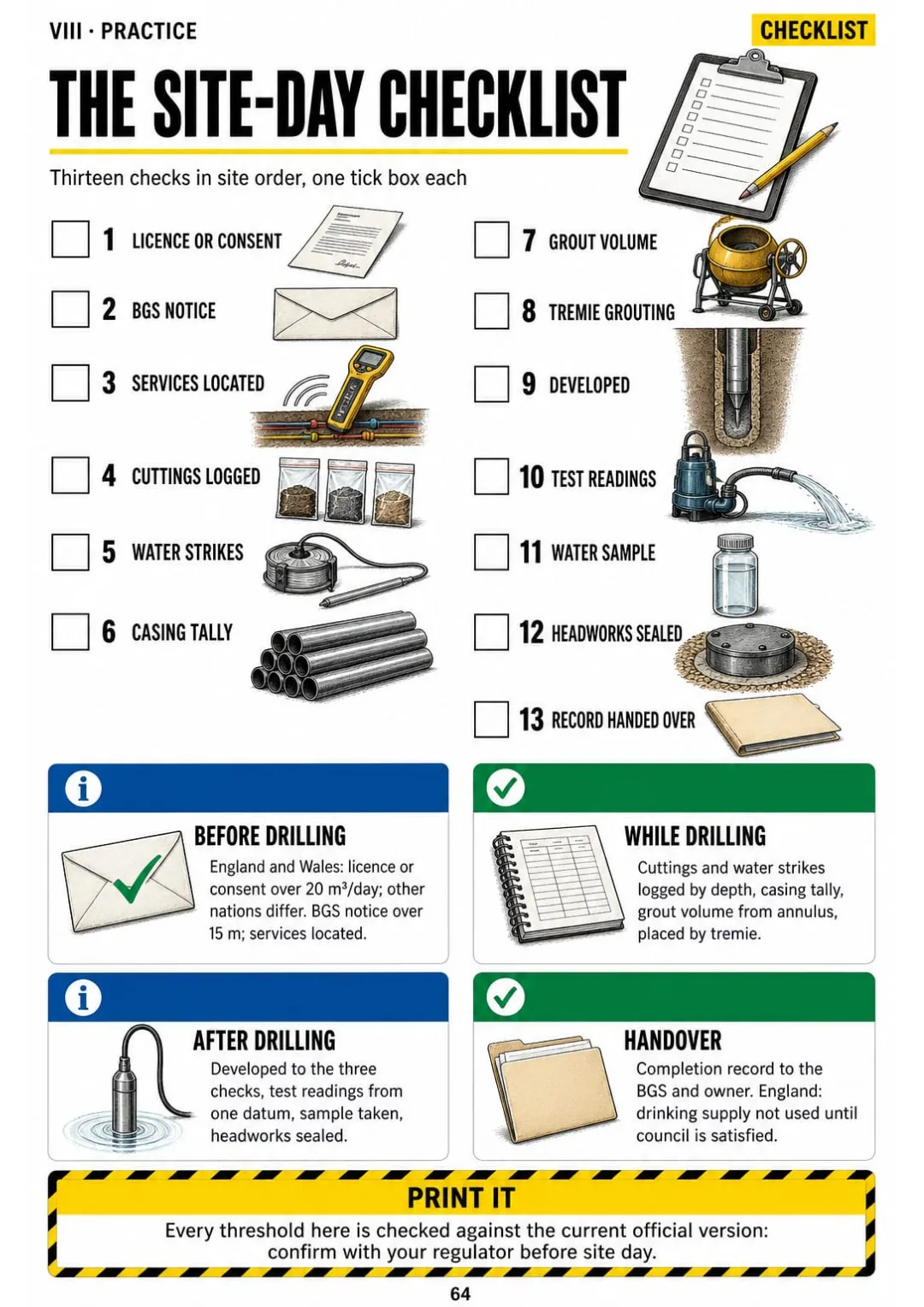
13 checks in site order, from BGS notice to handover, ready to print.

Swipe to see more →

These are real pages from the book. The table of contents is the full one: 8 parts and 61 topics.

The Problem Isn't You. It's How It Was Explained to You.

You're on the rig. The driller is running rotary with mud, returns have dropped at the pit, and he turns to you: "Where's it going?" You know the loop works, but you can't say where it's breaking.

Most of what you know you picked up by ear. The manual gives the mud circuit in three dense paragraphs, and every driller you've worked with does it a bit differently.

Shell, chisel and driven casing: the cleanest samples in clays, sands and gravels

In the book, the rotary mud loop is one drawing: pump → swivel → rods → bit → annulus → pit. You follow the arrows and see where the mud goes and what it brings up.

The same goes for the DTH hammer, cable-percussion, the screen slot, grouting from the bottom up and the pumping test timeline: each one has its own page.

Next time the returns drop, you run through the loop in order and know which points to check first. You can say what's happening, without digging out the manual.

COMPARE FOR YOURSELF

The Same Topic, Two Ways to Learn It

THIS
  • The manual: line after line of text
  • Abstraction rules explained only in words
  • You turn up on site still unsure
Under the provisions of the Water Resources Act 1991, as amended, the abstraction of water from underground strata in England is subject to licensing by the relevant authority, save where the quantity abstracted does not exceed twenty cubic metres in any period of twenty-four hours, in which case the abstraction is generally exempt, although the aggregate of abstractions from the same source of supply by the same person must be taken into account, and exceptions, conditions and transitional arrangements may apply to certain categories of abstraction.
FOR THIS
  • The 20 m³/day line in one drawing
  • The figures in one box
  • You see it and you get it
Up to 20 m³/day (20,000 litres) is licence-exempt in England.
CONTENTS

Take a Look at the 8 Parts and 61 Topics

Rules and ground, rigs and drilling, logging, casing, screen and seal, development and test pumping, pump and headworks, records and closing, and practice: 65 pages, all illustrated.

IBefore You Drill: Rules and Ground · pp. 5-13
  1. The Whole Borehole on One Page
  2. Groundwater in One Drawing
  3. UK Aquifers: Where the Water Is
  4. Who You Deal With
  5. The 20 m³/day Line in England
  6. Telling the BGS: Wells Deeper Than 15 m
  7. Private Water Supply Rules
  8. Siting: Distances From Pollution
  9. Reading the Ground Before You Start
IIRigs and Drilling · pp. 14-23
  1. Three Rigs Side by Side
  2. Rotary Drilling With Mud
  3. DTH Hammer With Air
  4. Cable-Percussion
  5. Choosing the Rig for the Ground
  6. The Drill String
  7. Bits and What They Are For
  8. Flushing Fluids
  9. Checking the Mud
  10. Rig Set-Up and Site Safety
IIILogging What Comes Up · pp. 24-30
  1. Collecting Cuttings Every Metre
  2. Describing a Sample in Order
  3. What the Rig Tells You
  4. Water Strikes and Rest Level
  5. The Strata Log, Filled In
  6. Chalk, Flints and Fissures
  7. Logging Mistakes to Avoid
IVLining: Casing, Screen and Seal · pp. 31-39
  1. The Borehole Design Drawing
  2. Casing Materials and Sizes
  3. Choosing the Screen
  4. Open Hole or Screened?
  5. Gravel Pack
  6. Worked Example: Annulus Volume
  7. Installing the String
  8. The Grout Seal
  9. Placing Grout From the Bottom Up
VDevelopment and Test Pumping · pp. 40-49
  1. Why Every Borehole Needs Developing
  2. Development Methods
  3. When Is It Developed?
  4. Three Kinds of Pumping Test
  5. Measuring the Test
  6. Drawdown Explained
  7. Worked Example: Reading the Drawdown
  8. Specific Capacity and Safe Yield
  9. The Recovery Test
  10. Taking the Water Sample
VIPump and Headworks · pp. 50-56
  1. Choosing the Submersible Pump
  2. Worked Example: Total Head
  3. Setting the Pump Depth
  4. Rising Main, Cable and Rope
  5. Headworks
  6. Apron and Chamber
  7. Treatment Kit: What Each Part Does
VIIRecords, Maintenance and Closing · pp. 57-60
  1. The Completion Record
  2. Looking After a Borehole
  3. Decommissioning a Borehole
  4. Old Wells and Boreholes on Site
VIIIPractice: Mistakes and Site Checklist · pp. 61-65
  1. Common Mistakes 1–5: Siting and Drilling
  2. Common Mistakes 6–10: Lining and Seal
  3. Common Mistakes 11–15: Testing and Finishing
  4. The Site-Day Checklist
  5. Borehole Words on One Page

One Page, One Topic, All Clear

Think of it this way:

You're two hours into a constant-rate test, the client is standing beside you, and he asks if the borehole will give the farm what it needs. You have to read the drawdown and answer, there and then.

In the book you open the pumping test page and see the step test, the constant-rate test and the recovery test on one timeline. Water level, pumping rate and time, drawn on the same line.

Why the upper annulus is grouted, and which grouts seal it

The same with siting distances, the rotary mud loop, choosing the screen, grouting from the bottom up and total head: each one on its own page.

Borehole Drilling Illustrated is 8 parts and 61 topics, all drawn, with three worked examples, 15 common mistakes shown before and after, and a site-day checklist at the end.

What you see drawn, you don't have to memorize.

What's Inside Borehole Drilling Illustrated:

Ipp. 5-13

Before You Drill: Rules and Ground

The whole borehole on one page, groundwater and UK aquifers, who you deal with, the 20 m³/day line, telling the BGS about wells deeper than 15 m, private supply rules, siting distances and reading the ground.

IIpp. 14-23

Rigs and Drilling

Rotary with mud, DTH hammer with air and cable-percussion side by side, choosing the rig for the ground, the drill string, bits, flushing fluids, checking the mud and rig set-up.

IIIpp. 24-30

Logging What Comes Up

Collecting cuttings every metre, describing a sample in order, what the rig tells you, water strikes and rest level, a filled-in strata log, chalk and fissures, and logging mistakes.

IVpp. 31-39

Lining: Casing, Screen and Seal

The design drawing, casing materials and sizes, choosing the screen, open hole or screened, gravel pack, a worked annulus volume, installing the string and the grout seal from the bottom up.

Vpp. 40-49

Development and Test Pumping

Why and how to develop a borehole, when it's done, the three pumping tests, measuring the test, drawdown with a worked example, specific capacity, safe yield, recovery and the water sample.

VIpp. 50-56

Pump and Headworks

Choosing the submersible pump, a worked total head example, setting the pump depth, rising main, cable and rope, headworks, apron and chamber, and what each part of the treatment kit does.

VIIpp. 57-60

Records, Maintenance and Closing

The completion record, looking after a borehole, decommissioning one properly and dealing with old wells and boreholes on site.

VIIIpp. 61-65

Practice: Mistakes and Site Checklist

15 common mistakes in before-and-after drawings, from siting to finishing, the site-day checklist and borehole words on one page.

At the end of the book: 3 worked examples, 15 common mistakes drawn before and after, and a 13-point site-day checklist.
Plus: 2 Free Books

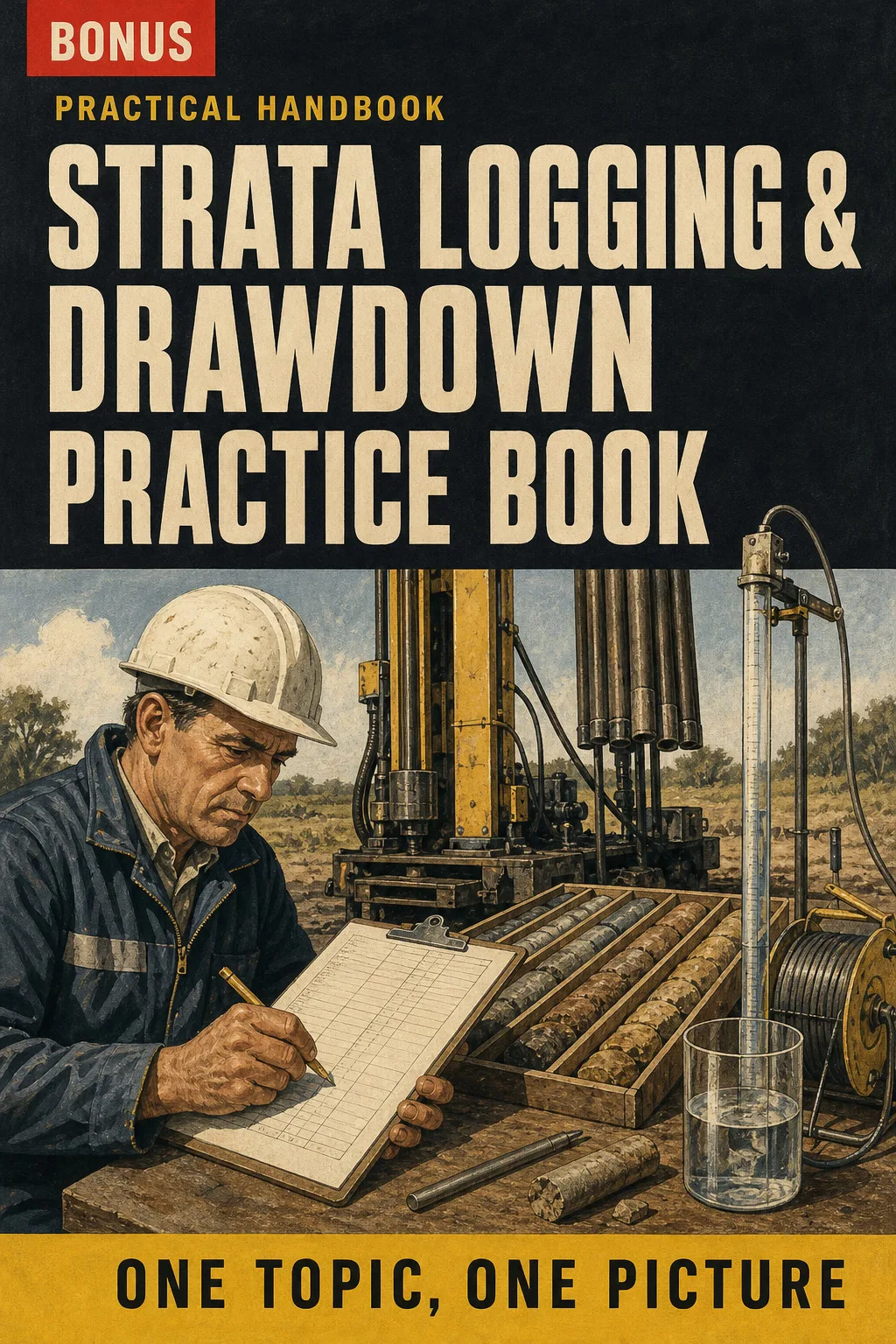
Strata Logging & Drawdown Practice Book

BONUS 1: «Strata Logging & Drawdown Practice Book»

Value on its own: US$ 17.90

Blank log sheets and worked drawdown exercises to practise logging cuttings and reading a pumping test until it comes naturally.

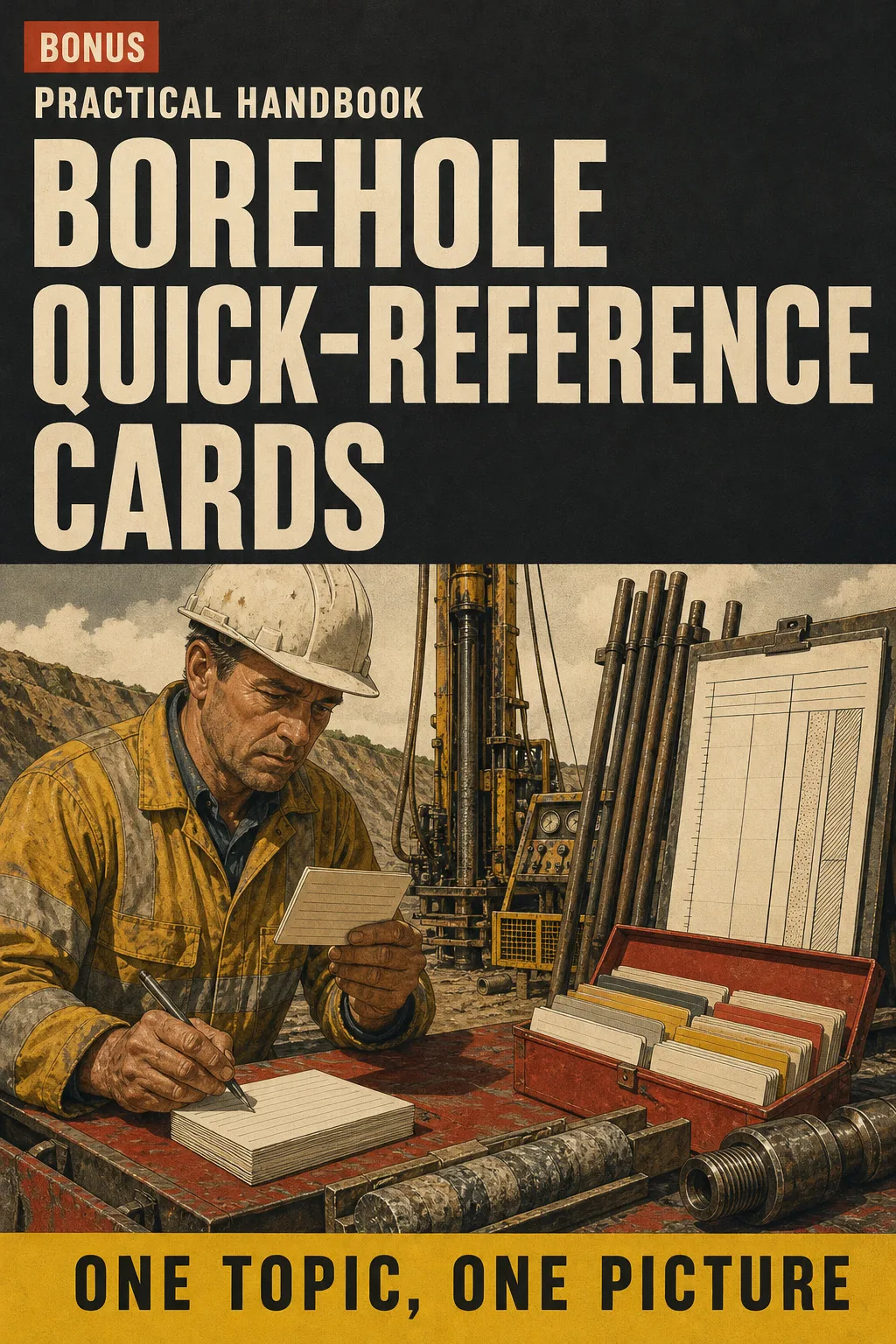
Borehole Quick-Reference Cards

BONUS 2: «Borehole Quick-Reference Cards»

Value on its own: US$ 14.90

Every key step, measurement and check on printable cards you can keep in the cab or the site folder.

Borehole Drilling Illustrated with 2 Free Books

  • Borehole Drilling Illustrated: 65 illustrated pagesUS$ 63
  • BONUS 1: Strata Logging & Drawdown Practice BookUS$ 17.90
  • BONUS 2: Borehole Quick-Reference CardsUS$ 14.90
  • High-resolution PDF to printIncluded
Total value US$ 95.80
YOUR PRICE:
US$ 27
You save US$ 68.80
YES, I WANT BOREHOLE DRILLING ILLUSTRATED FOR US$ 27

📄 This is a digital PDF book sent to your email: nothing is printed or shipped.

Secure purchaseEncrypted payment30-day guarantee

PDF by email: We email you Borehole Drilling Illustrated as a PDF, together with the two free books. It's a single payment: no installments, no extra charges.

Who This Book Is For

You work beside the rig

You work beside the rig

Every step you've seen done by ear, drawn in site order. You know what comes next and why, before the driller asks.

You already drill boreholes

You already drill boreholes

Everything you do, organised and on paper: screen, grout, pumping tests, total head. Ready to print and keep in the site folder.

You're planning your own supply

You're planning your own supply

See every step the driller should take on your land before the rig arrives, so you can ask the right questions and understand the answers.

Everything You Get Today

US$ 95.80US$ 27
YES, I WANT BOREHOLE DRILLING ILLUSTRATED FOR US$ 27

📄 This is a digital PDF book sent to your email: nothing is printed or shipped.

30DAYS
GUARANTEE

30-Day Guarantee

Try Borehole Drilling Illustrated for 30 days, bonus books included.

We refund everything if the file won't open, if the book isn't what you see here, if you were charged twice or if the email doesn't arrive. Just email us.

You pay once. No subscriptions.

Frequently Asked Questions

Is it for me if I've been drilling for years?

Yes. It isn't a beginner's book: it puts what you already do in one order, drawn, in metres, millimetres and litres, with UK rules. Handy for checking, explaining to a client or training an assistant.

Where does the content come from?

From current UK guidance and law: Environment Agency guidance, the Water Resources Act 1991, the Private Water Supplies Regulations, BS 5930 and BS ISO 14686. The 20 m³/day licence line drawn in the book is England's; in Wales, Scotland or Northern Ireland, check the threshold with NRW, SEPA or NIEA. Every threshold and distance is flagged for checking against the current official version.

Is it official material?

No. It's an independent illustrated book. It isn't published, approved or endorsed by any regulator or standards body.

Does it replace training or a course?

No. It doesn't give you a certificate, a card or a qualification, and it doesn't replace training on the rig, the site risk assessment, laboratory water testing or advice from your regulator or local authority. It helps you understand and remember each step.

Are the practice exercises from an official exam or course?

No. The log sheets and drawdown exercises are written for this book and aren't official questions from any exam or course.

When and how does it arrive?

The book and the 2 free books arrive as PDFs by email, at the address you enter when you pay.

Do I have to pay every month?

No. It's a single payment. No subscription.

Can I have it on paper?

Yes. The PDFs are made for printing, at home or at a print shop, so you can take them to site.

How does the refund work?

You have 30 days. We refund everything if the file won't open, if the book isn't what you see on this page, if you were charged twice or if the email doesn't arrive: just email us.

Before You Close This Page

No more rereading without it sticking.

The rotary mud loop: you see it drawn, and that's it.

You turn up on site knowing where every step is.

Drawings make studying faster.

The book is right below.

One-time payment: US$ 27 · Guarantee: 30 days · PDF by email

YES, I WANT BOREHOLE DRILLING ILLUSTRATED FOR US$ 27

📄 This is a digital PDF book sent to your email: nothing is printed or shipped.